
Across Germany · for skilled trades and mid-sized firms
Fill your apprenticeships with candidates from Ghana
If it works out, an apprentice stands in your workshop at the end of it who fits your trade and speaks German at level B1. If it does not, you have paid nothing. Until then we handle selection, language training and the entire official procedure.
A manageable financial risk
You make no advance payment. Our fee falls due only after the apprenticeship has begun, in several stages. The first instalment comes after probation has been passed, the last one only when you keep the apprentice on after they have qualified.
Selection and preparation in Ghana itself
Our partner on the ground runs the selection of candidates, organises the language qualification and obtains the necessary documents. The process therefore does not start once they are in Germany — it starts well before they travel.
One point of contact for the whole procedure
From selecting candidates through the chamber of trade and the Federal Employment Agency to the visa procedure, we coordinate the necessary steps and tell you in good time what is needed from you.
Who this model suits
Skilled-trade and mid-sized companies that have been unable to fill apprenticeships for some time — in principle any dual apprenticeship trade, for example electrical work, plumbing and heating, metalwork, industrial mechanics, roofing, vehicle technology, logistics, hotels and catering, or the food trades.
We do not place into healthcare or nursing professions — for applicants from Ghana this is excluded by law.
How a placement works — in five steps
- First conversation and letter of intent. 30 to 45 minutes on the phone: your trade, your pay, your schedule. If it fits, we set the plan out on a single page — non-binding and free of charge.
- Search and preparation in Accra. Our partner looks for suitable applicants, checks certificates and documents, and accompanies the German course up to the B1 exam.
- Your video interviews, your decision. You receive a shortlist with certificates and a video introduction, speak to the proposed candidates yourself and decide at your own pace.
- Contract, chamber, employment agency. Training contract, registration with the chamber, approval by the Federal Employment Agency — we prepare all of it and tell you in good time what is needed from you.
- Visa, arrival, start of training. The accelerated procedure, the visa appointment in Accra, travel and registration in Germany — and we remain available to you and the apprentice afterwards.
What does it cost you, long term, to have no apprentices at all?
how long a skilled-trade position stays unfilled on average
search, onboarding and lost contribution margin combined — with no guarantee of success
skilled trades already have no suitable applicant on the market
unfilled apprenticeships in NRW alone
Today's apprentice is tomorrow's skilled worker
An unfilled apprenticeship costs you nothing during the training years — what gets expensive is the skilled worker you will be missing a few years later. Whoever trains today has that person in the building, while others are still searching an empty market. How these figures are arrived at, and how the calculation looks with your own hourly rate, is set out on the Our Model page.
What we take care of — and what stays with you
Selection
You receive candidates who suit the trade, whose German has been tested at level B1 and whose documents are complete.
Chamber & authorities
We prepare the registration of the training contract and assemble the documents for approval by the chamber and the Federal Employment Agency.
Visa
We prepare the accelerated procedure under § 81a and run the visa procedure up to the appointment at the German embassy in Accra.
Arrival
Travel, registration, bank account, health insurance, vocational school — and we remain available to you and the apprentice throughout the apprenticeship.
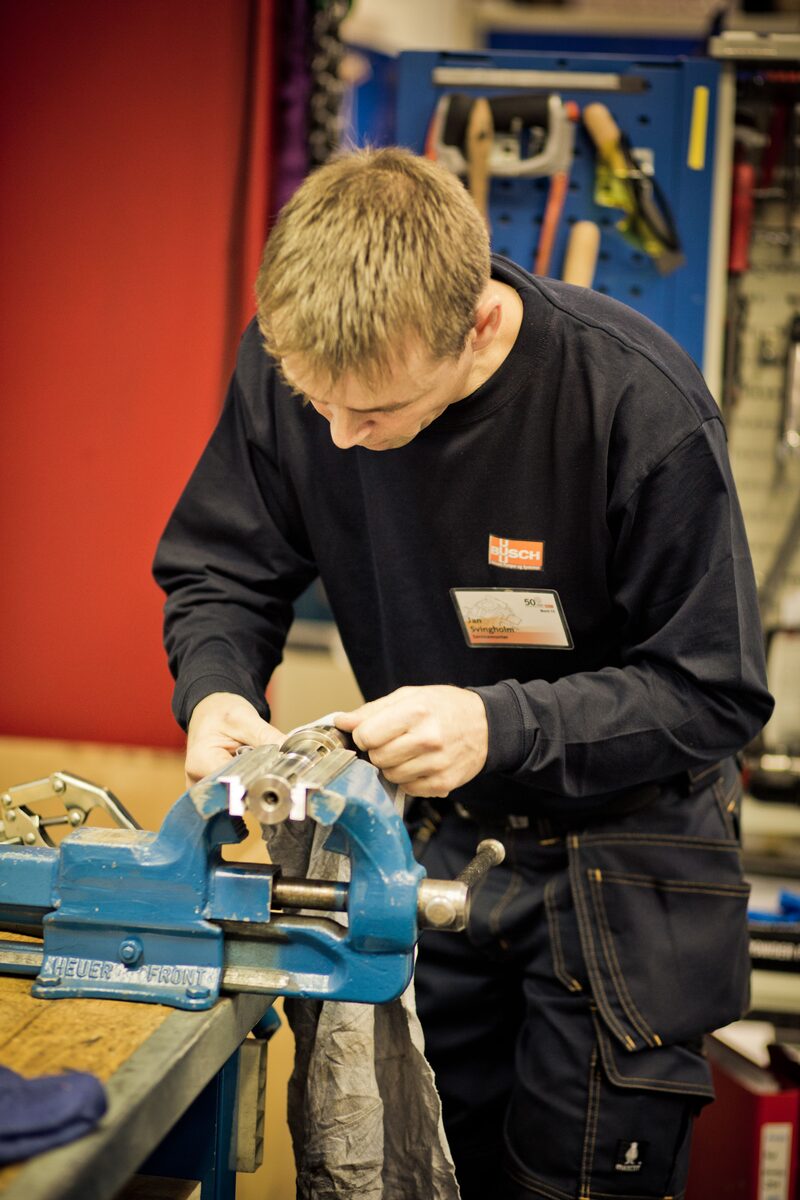
And what stays with you
You train — we take care of everything else. What we need from you is an apprenticeship position, authorisation to train from your chamber, and the willingness either to provide accommodation or to set pay at a level the authorities accept as covering the cost of living.
Before you commit, we make a shortlist and you hold your own video interview with the candidates we propose. You should take that step in every case — you are hiring someone for three and a half years.
Why Ghana — and why us
Why Ghana
English is the official language and the language of instruction, there is a dense network of technical and vocational schools, and the population is young with high youth unemployment. Those who come to us usually bring a technical background with them, and a reason to see the long road to a qualification through.
Why us
Our partner in Accra is Adu Nasir Ahmad with his organisation UPED Programs, active in international education placement since 2018. He was our founder's host father — this partnership rests on a personal foundation, not on a contract with an agency we have never met. More about us and our partner →
Does the model fit your company?
For a procedure to have a prospect of success, three things need to be in place:
- Pay or accommodation. You pay around €1,050 gross in the first year — or you provide accommodation or meals and reduce the amount to be proven accordingly. Without a secured cost of living the embassy will not grant a visa.
- Authorisation to train. Your company is registered with the chamber as a training company.
- Planning in time windows. We never promise a confirmed arrival date — authorities in two countries are involved. You should be able to plan with a window of 12 to 18 months.
Set out in detail on the For Companies page.
Frequently asked questions
Why candidates from Ghana when many young people here cannot find a place?
Nationally, tens of thousands of young people are looking for a place — but mostly in commercial and social professions, hardly at all in roofing or industrial mechanics. The problem is not the number of applicants, it is the fit with the trade. If you have not yet made a serious attempt with applicants in Germany, we recommend starting there — we are the second route, not the first. In Ghana, English is the official language and the language of instruction, there is a dense network of technical and vocational schools, and the population is young with high youth unemployment.
What does the placement cost?
One fixed price for the entire service, due in four instalments after training starts — the first once probation has been passed. The amount and the full breakdown are on the Our Model page. The only addition is the €411 fee for the accelerated official procedure, which you pay directly to the immigration office.
Who carries the risk if it goes wrong?
Largely we do. You pay nothing before the training contract is signed. The first instalment falls due only once probation has been passed; if the training ends before that, all outstanding instalments fall away. The final instalment only arrives when you keep the apprentice on after they qualify — so we are paid in full only if they have become a skilled worker in your company.
Do the candidates speak German?
Yes. They learn German up to level B1 before entering the country and sit the exam at a recognised institute, usually the Goethe-Institut in Accra. Without that certificate the embassy will generally not grant a visa. English is the official language and the language of instruction in Ghana — so if the German ever falters on the shop floor, you carry on in English.
How long does the procedure take?
Realistically 12 to 18 months from first enquiry to the start of training. That is less down to us than to the fact that German apprenticeships begin only once a year and authorities in two countries are involved. This is why we give a time window and never a promised arrival date. The Process page shows each step.
Do you place into nursing professions as well?
No. Placement from Ghana into healthcare and nursing professions is prohibited by law, including for apprenticeships. We observe this without exception and cannot accept such enquiries.
Where we stay honest
- No promised arrival date, but a realistic time window — because authorities in two countries are involved and anything else would be misleading.
- No placement at any cost. If we have nobody suitable for your trade, we say so.
What we cannot yet show, and where our selection reaches its limits, is set out plainly on Why us.
Arrange a first conversation
Two or three sentences about your company and the trade are enough — we will get back to you for a non-binding call. You can also use the longer form on the Contact page; it also lists what we will cover in the first conversation.